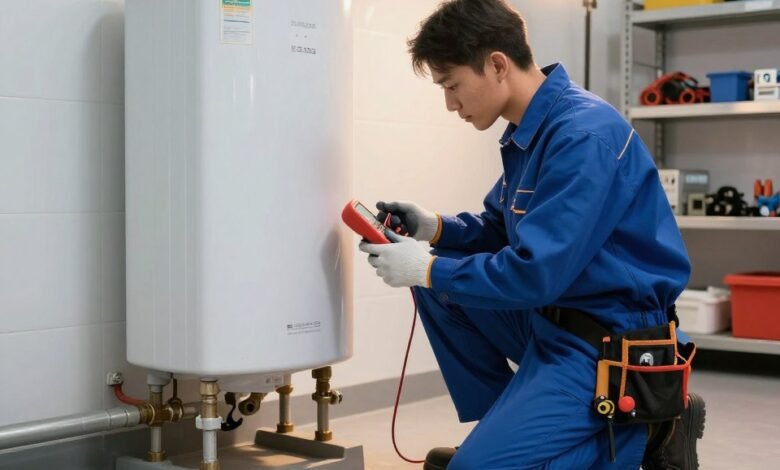
A water heater that suddenly produces cold water, leaks around the tank, makes unusual noises, or repeatedly shuts down can turn a normal morning into a plumbing emergency. Some problems are relatively simple, while others involve electricity, gas, pressure, or combustion and should not be handled as a DIY project.
The first step in water heater repair is identifying the symptom and the type of heater involved. Storage-tank, tankless, electric, gas, and heat-pump systems can fail for very different reasons.


Common water heater repair problems and what they can mean
Not every problem means the entire unit needs replacing. The symptom often provides a useful starting point.
| Problem | Possible cause | Recommended response |
|---|---|---|
| No hot water | Failed heating element, thermostat, power supply, burner or ignition problem | Check basic controls; professional diagnosis may be needed |
| Water is only lukewarm | Faulty thermostat, heating element, excessive demand or sediment | Inspect settings and arrange service if the issue persists |
| Water around the tank | Loose connection, valve problem or tank corrosion | Shut off the appropriate supply if necessary and seek prompt repair |
| Rumbling or popping sounds | Sediment or mineral buildup | Professional cleaning or maintenance may be appropriate |
| Heater repeatedly shuts off | Safety control, ignition, airflow, electrical or gas-related fault | Have the unit inspected rather than repeatedly resetting it |
| Hot water runs out quickly | Failed component, undersized system, sediment or increased household demand | Diagnose the system before replacing it |
A leaking tank deserves particular attention. If the tank itself has corroded and is leaking, repairing an internal failure may not be practical; replacement can be the more sensible solution.
Electric water heaters
Electric units commonly depend on heating elements and thermostats. A failed element can leave you with little or no hot water, while a faulty thermostat can cause inconsistent temperatures.
Before doing anything beyond simple external checks, switch off power at the appropriate electrical disconnect or breaker. Do not remove electrical covers unless you understand the hazards and have the necessary skills.
Gas water heaters
Gas-fired systems require additional caution because they involve combustion and exhaust gases. Carbon monoxide is colorless and odorless, and malfunctioning fuel-burning appliances, including water heaters, can produce it. The U.S. Consumer Product Safety Commission recommends working carbon monoxide alarms outside sleeping areas.
If you smell gas, see signs of combustion problems, or suspect a venting fault, do not treat it as a routine plumbing repair. Leave the area if necessary and contact an appropriately qualified professional or the relevant emergency service.
The risk is not theoretical. CPSC recalls have included gas and tankless water heaters because of potential carbon monoxide hazards associated with venting and combustion components.
💡 Pro Tip: Before calling a technician, photograph the heater’s model and serial-number label. Having the exact model information can make it easier to identify compatible parts, manufacturer guidance, and any applicable safety recall.
When a simple check is reasonable
Homeowners can safely perform a few basic observations without dismantling the appliance.
Check whether the heater has power, whether the temperature control has been changed accidentally, and whether there are visible leaks around connections. For a tankless model, note any error code displayed on the control panel and give that information to the technician.
You can also check whether the system is supplying hot water consistently after another appliance or shower has been using it heavily. Temporary shortages are different from a heater that suddenly stops producing hot water altogether.
Do not bypass safety controls, repeatedly reset a tripping electrical breaker, alter gas controls, or interfere with venting. Those actions can turn a repair problem into a serious safety issue.
Repair or replacement?
Age alone should not automatically determine the answer. The condition of the tank, availability of replacement parts, efficiency, repair history, installation requirements, and expected remaining service life all matter.
A relatively inexpensive component may make repair worthwhile. A badly corroded storage tank, repeated failures, or a major internal fault can make replacement more economical.
Energy efficiency is also worth considering when an older system is being replaced. The U.S. Department of Energy provides guidance on residential water-heater efficiency and purchasing considerations.
For UK homeowners, terminology and installation requirements can differ, particularly for gas appliances and hot-water systems. Use a suitably qualified professional for gas-related work and follow local building and safety requirements.
Preventing future water heater problems
Regular maintenance can reduce avoidable failures. Manufacturers’ maintenance instructions should take priority because requirements vary by model.
Watch for early warning signs such as recurring leaks, unusual noises, inconsistent temperatures, visible corrosion, or repeated shutdowns. Addressing a developing problem before the heater fails completely can also reduce the chance of water damage.
Temperature settings deserve attention as well. The U.S. Department of Energy’s Federal Energy Management Program lists 120°F as a useful water-heater setting for energy savings and reducing scalding risk.
Maintenance should also include checking for leaks and ensuring equipment is operated according to manufacturer instructions. DOE guidance emphasizes regular inspection, prompt attention to leaks, and maintenance based on the equipment manufacturer’s recommendations.
📌 Key Takeaway: Water heater repair is often about diagnosing the underlying fault rather than simply replacing a part. Basic external checks are reasonable, but gas, electrical, combustion, pressure, and serious leakage problems warrant professional attention.
Frequently Asked Questions
How do I know if my water heater needs repair?
Common warning signs include no hot water, inconsistent temperature, leaks, unusual noises, repeated shutdowns, or error codes. The correct repair depends on the heater type and the failed component.
Can I repair a water heater myself?
Simple external checks may be appropriate, but internal electrical, gas, combustion, pressure, and venting work can be hazardous. Follow the manufacturer’s instructions and use a qualified professional when the repair involves these systems.
Is a leaking water heater always repairable?
No. A leaking connection or valve may be repairable, but corrosion through the storage tank generally points toward replacement rather than a lasting repair.
Why does my water heater make popping or rumbling noises?
Sediment or mineral deposits can accumulate inside storage-tank heaters and contribute to popping, cracking, or rumbling sounds. A technician can determine whether cleaning or another repair is appropriate.
When should I replace instead of repair?
Replacement becomes more attractive when the tank is badly corroded, major components have failed repeatedly, suitable parts are unavailable, or the cost and disruption of continued repairs no longer make financial sense.
A water heater does not always need to be replaced when something goes wrong. Identifying the symptom, checking the manufacturer’s guidance, and distinguishing a minor component failure from a safety-related problem can help you make a better decision. When water heater repair involves gas, electricity, combustion, pressure, or significant leakage, professional diagnosis is usually the safer path.