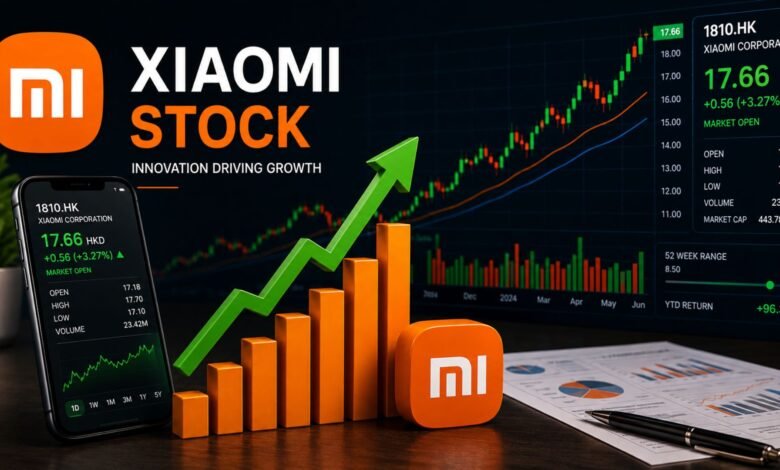
Xiaomi stock attracts attention from investors who want exposure to a technology company expanding beyond smartphones into connected devices, smart hardware, and new mobility markets. Xiaomi Corporation has developed from a budget smartphone brand into a broader consumer electronics and smart manufacturing company. This guide explains the company’s business model, growth opportunities, risks, and key factors investors should examine before making decisions.
Understanding the company behind the ticker is essential because share performance depends on more than product popularity. Revenue growth, competitive pressure, innovation strategy, profitability, regulations, and global market conditions all influence investor sentiment.

Understanding Xiaomi stock and the company behind it
Xiaomi Corporation was founded in 2010 and listed on the Main Board of the Hong Kong Stock Exchange in 2018 under the stock code 1810.HK. The company focuses on smartphones, smart hardware, and an Internet of Things ecosystem connecting multiple devices.
The company’s ecosystem approach is one of its main advantages. Instead of relying only on smartphone sales, Xiaomi has built a portfolio that includes wearables, home products, tablets, software services, and other connected technologies. This creates multiple revenue opportunities and strengthens customer relationships.
For investors researching Xiaomi stock, the key question is whether Xiaomi can transform its large consumer base into sustainable long-term earnings growth. A strong brand presence helps, but investors also need to examine margins, competition, and execution.
Main factors that influence Xiaomi’s market performance
Several areas shape how investors view Xiaomi’s future prospects.
| Factor | Why it matters for investors |
|---|---|
| Smartphone business | Remains a major part of Xiaomi’s identity and revenue generation |
| AI and IoT ecosystem | Creates opportunities for connected products and recurring customer engagement |
| Electric vehicle expansion | Represents a major growth opportunity but requires significant investment |
| Global competition | Rival brands can pressure pricing and profit margins |
| Regulatory environment | Policies affecting technology companies can influence investor confidence |
Smartphone market position
Xiaomi remains strongly associated with smartphones, especially in price-sensitive markets. Its strategy has traditionally focused on offering competitive specifications at attractive prices. However, the smartphone industry is highly competitive, with companies constantly competing through pricing, innovation, and distribution.
Future growth depends on maintaining market share while improving profitability. Investors often look beyond shipment numbers and examine whether hardware sales generate stronger financial returns over time.
Expansion beyond smartphones
A major part of Xiaomi’s investment story is diversification. The company has developed a connected ecosystem where smartphones interact with smart home devices, wearables, and other products.
This ecosystem strategy can increase customer loyalty and create additional sales channels. A consumer who owns several Xiaomi products may become more valuable to the company than a single-device customer.
Electric vehicle ambitions
Xiaomi’s move into electric vehicles has added a new dimension to its growth strategy. Entering the automotive sector provides a potential long-term opportunity, but it also introduces challenges such as manufacturing costs, competition from established automakers, supply chain management, and capital requirements.
Investors should evaluate this area carefully because large expansion projects can create future growth while also affecting short-term financial performance.
💡 Pro Tip: Investors evaluating Xiaomi should compare revenue growth with profit margins. A company can increase sales quickly, but improving efficiency and generating stronger returns are often more important indicators of long-term business quality.
Advantages and risks investors should consider
The investment case includes both positive factors and potential challenges.
Potential advantages
Xiaomi benefits from several strategic strengths:
- A recognized global consumer technology brand
- A broad product ecosystem beyond smartphones
- Experience competing in international markets
- Opportunities in AI, connected devices, and smart mobility
The company’s ecosystem model gives it a different position compared with traditional smartphone manufacturers. Instead of depending on one product category, Xiaomi can develop relationships across multiple technology segments.
Key risks
Investors should also consider several risks:
- Intense competition from global and regional technology companies
- Pressure on hardware pricing and margins
- Dependence on consumer demand cycles
- Regulatory uncertainty affecting technology businesses
- Execution risks from large new ventures
Looking at Xiaomi stock requires balancing growth opportunities against these uncertainties. A strong brand does not automatically guarantee strong shareholder returns.
How investors typically analyze Xiaomi’s outlook
Before considering an investment, many investors review several financial and strategic indicators:
- Revenue trends and earnings growth
- Profit margins and operational efficiency
- Market share changes
- Product innovation and research investment
- Management execution and long-term strategy
Investors may also compare Xiaomi with other technology companies to understand valuation differences and competitive advantages.
The performance of Xiaomi stock can change based on market expectations, not only company results. If investors believe future growth will exceed expectations, sentiment may improve. If concerns about competition or profitability increase, the market may react negatively.
What makes Xiaomi different from traditional hardware companies?
Many electronics companies depend heavily on selling physical products. Xiaomi has attempted to create a wider technology ecosystem by connecting hardware, software, and online services.
This approach can provide benefits such as stronger customer retention and opportunities for additional product sales. However, building an ecosystem requires continuous innovation and effective management across multiple business areas.
For investors, this means evaluating Xiaomi as more than a smartphone manufacturer. The company’s future value may depend on how successfully it combines consumer electronics, software capabilities, and emerging technology businesses.
Frequently Asked Questions
Is Xiaomi stock available to US investors?
US investors may access Xiaomi shares through international brokerage platforms that provide access to Hong Kong-listed securities. Availability depends on the broker, account type, and regional investment rules. Investors should check platform-specific requirements before purchasing international shares.
What exchange is Xiaomi listed on?
Xiaomi is listed on the Hong Kong Stock Exchange. The company’s main listing is under the stock code 1810.HK. Investors should confirm trading details with their brokerage before placing orders.
Does Xiaomi only make smartphones?
No. Xiaomi operates across multiple consumer technology categories, including smart hardware and connected devices supported by its IoT ecosystem. The company has expanded beyond phones into broader technology markets.
What are the biggest risks of investing in Xiaomi?
Major risks include competition, changing consumer demand, regulatory developments, margin pressure, and uncertainty around new business areas. Investors should review company reports and market conditions before making decisions.
Is Xiaomi considered a growth company?
Xiaomi is often viewed as a technology growth company because of its expansion into areas such as smart devices and electric vehicles. However, future performance depends on execution, profitability, and competitive conditions.
📌 Key Takeaway: Xiaomi offers investors exposure to a technology ecosystem that extends beyond smartphones, but evaluating the company requires careful attention to profitability, competition, and long-term execution rather than brand popularity alone.
Conclusion
Xiaomi stock represents an opportunity to invest in a technology company with ambitions across smartphones, smart ecosystems, and emerging industries. Its strengths include brand recognition, product diversification, and global reach. At the same time, investors must consider competitive pressure and the challenges of managing expansion.
A balanced evaluation should focus on financial performance, strategic execution, and market conditions. Xiaomi’s future will depend on how effectively it converts innovation into sustainable shareholder value.