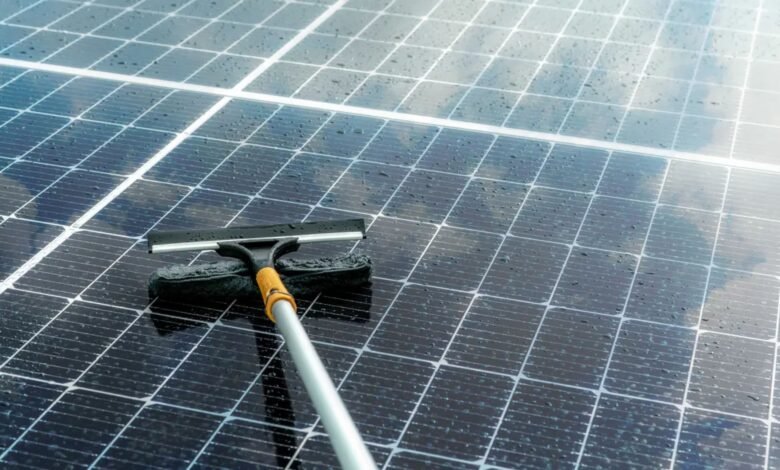
Maximizing energy generation requires regular solar panel cleaning to remove stubborn environmental debris. Photovoltaic systems represent a significant investment, yet dust accumulation disrupts energy production. Professional solar panel cleaning restores peak efficiency by eliminating performance-blocking obstructions.
Energy loss from dirty arrays ranges between 5% to 25% based on local climate patterns. In arid zones, unwashed modules lose output efficiency rapidly. Homeowners often mistake this drop for hardware failure. Routine solar panel cleaning resolves this issue instantly, securing optimal electricity generation without costly hardware upgrades.


Why Natural Rainfall Falls Short
Many property owners believe heavy rain handles solar panel cleaning naturally. Unfortunately, precipitation leaves mineral residue and dust rings as droplets evaporate. Rainwater lacks the mechanical friction needed to dissolve sticky pollutants like tree sap and smog.
Relying purely on weather causes grime to bake onto the anti-reflective coating. Over time, this layer causes optical damage. Manual solar panel cleaning remains essential to safeguard long-term system performance.
| Cleaning Approach | Pros | Cons | Best Suited For |
| Professional Service | Purified water, insured labor | Higher upfront cost | Large rooftop systems |
| DIY Garden Hose | Low cost, convenient | Leaves mineral spots | Ground-mounted arrays |
| Automated Sprinklers | Hands-free daily rinse | High cost, water waste | Commercial installations |
Best Practices for Safe Maintenance
Executing safe solar panel cleaning requires strict adherence to safety protocols and equipment guidelines. Climbing onto a wet roof presents severe hazards. Property owners should evaluate hiring professionals or utilizing specialized extension poles.
💡 Pro Tip: Always schedule solar panel cleaning during the early morning or late evening when glass surfaces are cool. Pouring cold water onto hot glass causes thermal shock, cracking photovoltaic modules.
Avoid household dish soaps or abrasive scouring pads. Standard detergents leave sticky films that attract dust faster. Utilizing proper solar panel cleaning techniques ensures a spotless, residue-free finish.
| Environment Type | Recommended Frequency | Primary Contaminant |
| Urban / Residential | Twice a year | Smog, dust, pollen |
| Agricultural | Quarterly | Dust, bird droppings |
| Desert / Arid | Monthly or Quarterly | Fine sand, windblown debris |
📌 Key Takeaway: Consistent solar panel cleaning prevents permanent glass staining, optimizes photovoltaic output, and ensures your renewable energy system operates at peak financial efficiency year-round.
Conclusion
Investing in regular solar panel cleaning ensures your renewable energy setup performs at maximum capacity throughout its operational lifespan. By removing efficiency-robbing debris, safe solar panel cleaning secures optimal electricity generation and accelerates your financial return on investment.
Frequently Asked Questions
How often should solar panel cleaning be performed?
Most residential systems require solar panel cleaning one to two times per year. Properties located near construction sites, agricultural fields, or heavy traffic zones benefit from quarterly maintenance. Regular visual inspections of your inverter monitoring app help determine the ideal solar panel cleaning schedule by tracking output drops.
Can I use regular tap water for solar panel cleaning?
Tap water contains dissolved minerals like calcium and magnesium. As moisture evaporates under direct sunlight, these minerals leave white crusty deposits on the glass. These deposits block sunlight and reduce energy production. Always utilize deionized or purified water during solar panel cleaning for a spotless finish.
Does dirty equipment void the manufacturer warranty?
Most photovoltaic manufacturers require proof of proper care and routine solar panel cleaning to honor warranty claims. Allowing thick layers of grime, bird droppings, or lichen to accumulate can cause localized overheating known as hot spots. Severe damage from extreme neglect may invalidate specific manufacturer coverage terms.
Is it safe to walk on photovoltaic modules?
Walking directly on modules places immense mechanical stress on internal silicon wafers and soldered electrical connections. This pressure causes microscopic cracks that ruin output efficiency. Technicians performing solar panel cleaning always utilize specialized long-reach extension poles or roof walkways to service arrays safely.