A business website is often the first place potential customers go to learn about a company, compare options, or decide whether to make contact. Professional web design services help turn that digital presence into a useful business asset by combining visual design, usability, mobile performance, content structure, accessibility, and technical functionality.
The right approach is not simply about making a website look attractive. A successful site should make information easy to find, communicate what the business offers quickly, work across different devices, and guide visitors toward meaningful actions.


What Do Web Design Services Include?
Web design services cover much more than choosing colours, fonts, and images. Depending on the project, they can include planning the site structure, creating page layouts, designing navigation, developing responsive interfaces, improving user experience, integrating forms, and preparing pages for search engines.
A typical project may involve:
- Website strategy and information architecture
- UI and UX design
- Responsive mobile and tablet layouts
- Content organization
- Custom graphics and visual elements
- Contact forms and other functionality
- Content management system integration
- Basic technical SEO
- Accessibility considerations
- Performance and usability testing
The exact scope depends on the business, audience, website size, and required functionality.
Why Professional Web Design Matters
A website can technically work while still providing a poor experience. Confusing navigation, slow pages, weak calls to action, crowded layouts, or difficult-to-read content can make visitors leave before they understand the business.
Good design reduces that friction.
For a service business, for example, a visitor should be able to identify the services offered, understand the company’s value, find evidence that supports its claims, and locate contact information without unnecessary searching.
For an online publication or information site, structure becomes equally important. World Market Flow covers business, finance, technology, news, lifestyle, entertainment, and other subjects, so clear navigation and readable article layouts are particularly useful for moving readers between related topics.
Core Elements of a High-Quality Website
Several components deserve attention before a website is launched.
| Element | What to look for | Why it matters |
|---|---|---|
| Navigation | Clear menus and logical categories | Helps visitors find information |
| Responsive design | Layouts adapted to different screens | Supports mobile and desktop users |
| Page speed | Efficient images, code, and resources | Reduces unnecessary waiting |
| Content | Clear, useful, well-structured information | Answers user questions |
| Calls to action | Visible and relevant next steps | Helps users complete goals |
| Accessibility | Keyboard access, readable text, alternatives for media | Makes content more usable |
| SEO foundations | Crawlable pages, descriptive titles and structure | Helps search engines understand content |
Accessibility should be considered during design rather than added at the end. W3C’s WCAG 2.2 provides an international framework organized around four principles: perceivable, operable, understandable, and robust content.
Web Design for Mobile Users
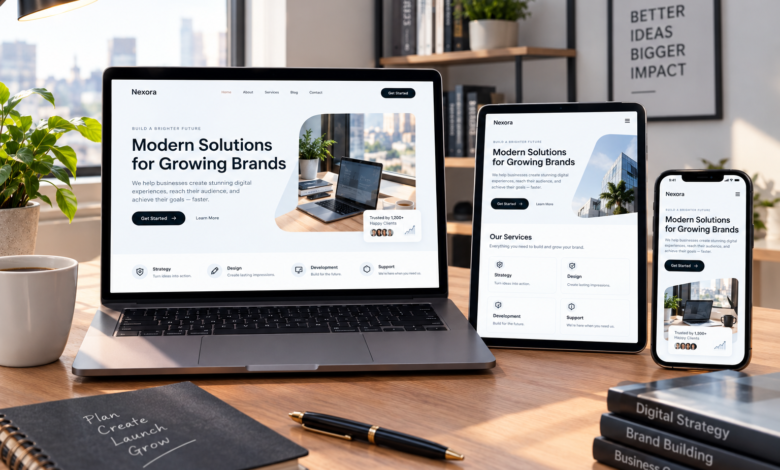
Responsive design is now a basic requirement rather than an optional feature. People may visit a site from phones, tablets, laptops, large monitors, or devices with different input methods.
A responsive layout should adapt menus, typography, images, buttons, forms, and content spacing to the available screen.
Mobile design also affects usability. Buttons need sufficient space for touch interaction, important information should not be buried beneath excessive decoration, and forms should remain practical on smaller screens.
💡 Pro Tip: Test important pages using an actual phone as well as browser resizing. A layout that looks fine on a desktop can still create awkward scrolling, tiny controls, or difficult forms on mobile.
Design, SEO, and User Experience Work Together
SEO should not be treated as something added after the visual design is finished. Page structure, headings, internal links, descriptive content, image handling, and usability can all influence how effectively visitors and search engines understand a website.
Google’s Search Central documentation continues to treat Core Web Vitals and page experience as relevant parts of the broader search ecosystem, with Interaction to Next Paint (INP) now among the Core Web Vitals.
That does not mean adding keywords everywhere. Strong web design services should create pages for people first, while making the underlying structure clear enough for search engines to interpret.
This is especially useful for websites covering several subjects. World Market Flow’s Technology section, for example, contains articles covering smartphones, software, cloud infrastructure, cybersecurity, and other technology subjects. A clear category structure helps readers navigate that range without confusing unrelated topics.
Choosing the Right Web Design Provider
The cheapest quote is not necessarily the lowest-cost solution if the finished website requires extensive repairs or redesigns.
Before hiring a provider, consider the following:
- Portfolio quality: Look for projects demonstrating clear layouts, responsive design, and appropriate visual decisions.
- Project scope: Confirm what design, development, content, testing, and post-launch work is included.
- CMS experience: Make sure the provider understands the platform your organization intends to use.
- Communication: Establish who supplies content, images, branding, and approvals.
- Performance: Ask how the site will be tested for speed and mobile usability.
- Accessibility: Find out whether accessibility is included in the design and testing process.
- Maintenance: Clarify who handles updates, security, backups, and future changes.
A strong provider should also be able to explain design decisions in business terms rather than focusing only on visual trends.
Common Mistakes to Avoid
One common mistake is prioritizing appearance over usability. Animations, large images, and visual effects can have a place, but they should support the site’s purpose rather than compete with it.
Another problem is unclear content. Even an attractive homepage becomes ineffective when visitors cannot quickly understand what the business does or what they should do next.
Ignoring accessibility is another avoidable issue. WCAG includes requirements and guidance covering areas such as keyboard operation, readable content, navigation, input assistance, and compatibility with assistive technologies.
Finally, businesses sometimes launch a site without considering how it will be maintained. A website needs a realistic plan for updating content, software, images, security measures, and business information.
📌 Key Takeaway: Effective web design services combine visual design with usability, responsive layouts, accessible content, technical foundations, and clear business goals. The strongest website is not necessarily the most elaborate one; it is the one that helps its intended audience accomplish tasks with minimal friction.
Frequently Asked Questions
How much do web design services cost?
Pricing varies considerably based on the number of pages, design requirements, functionality, content needs, integrations, and ongoing support. A simple brochure site and a complex ecommerce platform require very different levels of work.
How long does website design take?
A small website may take weeks, while a larger project can take several months. Content preparation, revisions, custom functionality, integrations, and approval stages can significantly affect the timeline.
Should a website be designed for mobile first?
A mobile-first approach can be useful because it encourages designers to prioritize essential content and functionality on smaller screens. The finished website should still provide a strong desktop experience.
Do web design services include SEO?
Some providers include basic SEO foundations, while others offer SEO as a separate service. Confirm exactly what is included, such as page titles, headings, URLs, technical structure, image optimization, and internal linking.
Why is website accessibility important?
Accessibility helps people with disabilities use digital content and can improve usability more broadly. WCAG 2.2 provides a recognized framework for developing more accessible web content.
Conclusion
A modern website needs to do more than make a business look professional. It should communicate clearly, load efficiently, work across devices, support accessibility, and provide visitors with an obvious path toward useful information or action.
Choosing web design services should therefore involve more than comparing screenshots or prices. Look at the provider’s process, technical knowledge, portfolio, communication, accessibility approach, and ability to build a website that can grow with the organization. A thoughtful foundation can make the site easier to use, maintain, and improve over time.