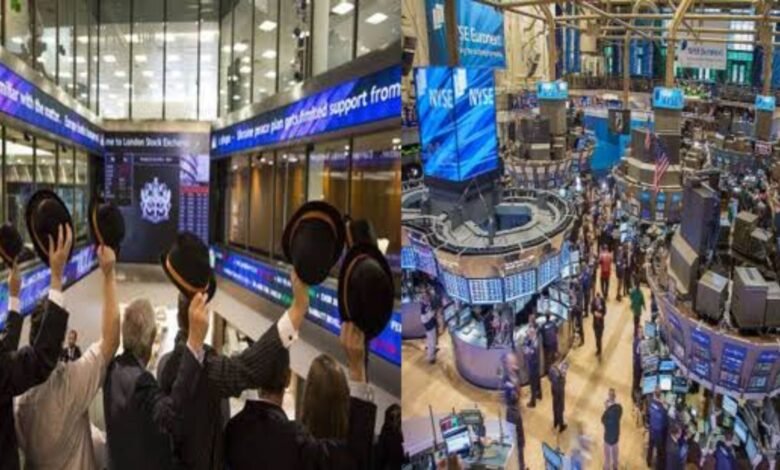
The stock market can create exciting opportunities, but confusing price movements, breaking headlines, and unexpected losses can make investing difficult. Without understanding how shares trade, what drives prices, or when markets open, beginners may make decisions based on fear or incomplete information. Learning the basics of the stock market helps investors understand financial news, evaluate opportunities, and approach their money with greater confidence.


What Is the Stock Market?
The stock market is a financial system where investors buy and sell shares of publicly traded companies. It connects businesses seeking capital with people who want to invest in companies and potentially benefit from their growth.
When a company lists its shares on an exchange, investors can trade those shares through brokerage accounts. Prices change based on buying and selling activity, financial performance, expectations, economic conditions, and investor sentiment.
The market includes exchanges, brokers, investors, institutions, and regulators that help transactions take place.
How Does the Stock Market Work?
The process is straightforward:
- Companies issue shares: Businesses may offer shares to raise money through an initial public offering (IPO).
- Investors place orders: Buyers and sellers submit orders through brokerage platforms.
- Orders are matched: Trading systems connect compatible buy and sell orders.
- Prices move: Share prices change according to supply, demand, expectations, and market conditions.
- Investors monitor performance: Investors review price movements, company results, and financial developments to make decisions.
Stock Market Today: What Influences Daily Prices?
The stock market today can move sharply because of economic reports, corporate announcements, government policies, and global developments. Investors watch these events to understand whether businesses may perform better or worse in the future.
Common factors influencing daily market movements include:
- Interest rates: Higher or lower borrowing costs can affect company profits and investment valuations.
- Inflation: Changes in inflation can influence consumer spending, business expenses, and central bank decisions.
- Corporate earnings: Strong financial results may encourage buying, while disappointing results can trigger selling.
- Economic data: Employment, consumer confidence, GDP, and manufacturing reports help investors assess economic health.
- Political and global events: Trade policies, international conflicts, and regulatory changes can influence market sentiment.
- Investor sentiment: Fear, optimism, uncertainty, and speculation can change demand for shares.
Daily movements are not always driven by one event. Several factors can influence prices simultaneously.
What Is the U.S. Stock Market?
The U.S. stock market is one of the world’s largest financial markets. It allows investors to trade shares of companies operating in technology, healthcare, finance, energy, retail, manufacturing, and many other industries.
The major U.S. stock exchanges include:
| Exchange | Description |
|---|---|
| New York Stock Exchange (NYSE) | A major exchange known for listing large established companies. |
| Nasdaq | An electronic exchange with many technology and growth-oriented companies. |
| NYSE American | Supports trading in a range of companies, including smaller businesses. |
| NYSE Arca | An electronic market known for trading exchange-traded products, including ETFs. |
The U.S. stock market includes companies of different sizes and industries, giving investors access to a broad range of investment opportunities.
What Are the Dow Jones and Other Major Market Indexes?
Market indexes help investors measure the performance of a group of stocks. They provide a snapshot of how selected companies or market segments are performing.
| Index | What It Tracks | Why Investors Follow It |
|---|---|---|
| Dow Jones Industrial Average (DJIA) | 30 major U.S. companies | Measures the performance of a selected group of established businesses. |
| S&P 500 | 500 leading U.S. companies | Provides a broad view of large-cap U.S. equities. |
| Nasdaq Composite | Thousands of Nasdaq-listed securities | Tracks a broad range of Nasdaq-listed stocks. |
| Russell 2000 | Smaller U.S. companies | Helps investors monitor small-cap stock performance. |
Dow Jones Stock Market Today
The Dow Jones is one of the most widely followed indexes in financial news. Investors examine its daily changes to understand how selected large U.S. companies are performing.
A rising Dow may reflect positive sentiment toward the companies it tracks, while a declining Dow may indicate weaker sentiment or concerns about economic and corporate conditions. However, the Dow alone does not represent the entire market.
Stock Market News Today: Why Investors Follow Headlines
Stock market news today helps investors understand the events behind changing prices. Financial headlines often highlight earnings announcements, economic releases, interest-rate decisions, and company developments.
Useful financial news topics include:
- Federal Reserve interest-rate decisions and policy statements.
- Quarterly earnings reports and revenue forecasts.
- Inflation and employment statistics.
- Mergers, acquisitions, and major corporate announcements.
- Changes in oil, gold, and other commodity prices.
- International trade and economic developments.
Investors should distinguish confirmed information from rumors and avoid making financial decisions based solely on dramatic headlines. A news event may already be reflected in a share price before the news reaches the wider public.
What Are Stock Market Futures?
Stock market futures are financial contracts that allow traders to speculate on or manage exposure to the future price of a market index or other asset.
U.S. index futures are often monitored before the regular trading session begins because they can provide an indication of overnight sentiment.
Investors typically watch futures for:
- Pre-market sentiment: Futures can indicate whether traders expect major indexes to open higher or lower.
- Global market influences: Overnight developments may affect futures prices.
- Economic announcements: Inflation, employment, and interest-rate news can influence futures.
- Risk management: Institutional investors may use futures to hedge exposure.
Futures do not guarantee the direction of the regular market opening. Prices can change significantly before the opening bell.
When Does the Stock Market Open?
The regular U.S. equity trading session generally opens at 9:30 a.m. Eastern Time and closes at 4:00 p.m. Eastern Time, Monday through Friday, except market holidays and certain early-close days.
The NYSE and Nasdaq follow these standard core trading hours for their main equity sessions. Exchange schedules and extended-hours rules can vary by market and broker.
| Trading Session | Eastern Time | Description |
|---|---|---|
| Pre-market trading | 4:00 a.m.–9:30 a.m. | Eligible securities may trade before the regular session, depending on the broker. |
| Regular trading | 9:30 a.m.–4:00 p.m. | The main U.S. stock trading session. |
| After-hours trading | 4:00 p.m.–8:00 p.m. | Eligible securities may trade after the regular closing bell. |
What Time Does the Stock Market Open in Pakistan?
For people following U.S. markets from Pakistan, trading hours change with U.S. daylight-saving time.
| U.S. Schedule | Opening Time in Pakistan | Closing Time in Pakistan |
|---|---|---|
| U.S. daylight-saving time | 6:30 p.m. PKT | 1:00 a.m. PKT (next day) |
| U.S. standard time | 7:30 p.m. PKT | 2:00 a.m. PKT (next day) |
These times represent the regular U.S. equity session converted to Pakistan Standard Time (PKT), not extended-hours trading. U.S. daylight-saving time typically runs from March to November, with exact transition dates changing annually.
Is the Stock Market Open Today?
The U.S. stock market generally operates on weekdays, but it closes for certain federal and exchange holidays. It may also close early on selected days.
The NYSE and Nasdaq publish official holiday calendars to help investors check scheduled trading sessions.
Common U.S. market holidays include:
- New Year’s Day
- Martin Luther King Jr. Day
- Presidents Day
- Good Friday
- Memorial Day
- Juneteenth
- Independence Day
- Labor Day
- Thanksgiving Day
- Christmas Day
The exchanges may also schedule shortened trading sessions, often around certain holidays. Checking the official trading calendar is the safest way to confirm whether a session is open.
What Time Does the Stock Market Close?
The regular U.S. equity session normally closes at 4:00 p.m. Eastern Time. After the closing bell, eligible stocks may continue trading during the after-hours session.
Closing prices help investors, financial analysts, and market participants review daily performance. However, after-hours trading can change prices, so the closing price may not be the same as the next session’s opening price.
Why Is the Stock Market Down Today?
When the stock market declines, investors often look for the reason behind the movement. A market decline may reflect concerns about economic growth, inflation, interest rates, corporate profits, or global uncertainty.
Possible reasons for a market decline:
- Higher interest rates: Investors may reassess stock valuations when borrowing costs increase.
- Weak earnings: Companies may disappoint investors with lower profits or weaker forecasts.
- Economic uncertainty: Slower growth or concerns about recession may influence stock prices.
- Geopolitical risks: International developments may affect trade, energy prices, and investor confidence.
- Profit-taking: Investors may sell shares after a period of strong gains.
- Market corrections: Prices can decline when investors reassess valuations.
A declining session does not necessarily mean a market crash. Investors should consider the size, duration, and underlying causes of a decline before drawing conclusions.
What Is a Stock Market Crash?
A stock market crash is a sudden and substantial decline in stock prices across a broad market or major index. Crashes often occur when investors rapidly sell shares because of fear, economic uncertainty, financial instability, or unexpected events.
A crash can affect retirement accounts, investment portfolios, businesses, and broader economic confidence.
Stock Market Crash vs. Market Correction
| Feature | Market Correction | Stock Market Crash |
|---|---|---|
| Price decline | Often a decline of around 10% from a recent peak | A sharp, rapid, widespread decline |
| Speed | May develop over weeks or months | May happen quickly |
| Investor sentiment | Concern or caution | Often intense fear and panic |
| Market impact | Can be temporary | May cause widespread disruption |
| Recovery | Can recover relatively quickly or take longer | Recovery can take months or years |
These are general descriptions, not strict definitions. Market crashes do not follow a single percentage threshold or timeline.
How to Read Stock Market Live Data
Stock market live data helps investors monitor prices, trading volume, index movements, and changes in market sentiment throughout a trading session.
A live market dashboard usually displays several important indicators.
| Indicator | Meaning |
|---|---|
| Index value | The current level of a market index. |
| Percentage change | The percentage increase or decrease from a reference value. |
| Trading volume | The number of shares traded during a specified period. |
| Bid price | The highest price a buyer is currently willing to pay. |
| Ask price | The lowest price a seller is currently willing to accept. |
| Market capitalization | The total market value of a company’s outstanding shares. |
| 52-week range | The highest and lowest share prices over the previous 52 weeks. |
Understanding these indicators can help readers interpret financial dashboards more effectively instead of focusing only on rising or falling prices.
How to Start Investing in the Stock Market
Beginning investors should focus on understanding risk, researching companies, and developing a sensible investment plan rather than chasing short-term profits.
Practical steps for beginners:
- Set your financial goals: Decide whether you are investing for retirement, long-term wealth, education, or another objective.
- Understand your risk tolerance: Consider how much volatility and potential loss you can comfortably handle.
- Choose a regulated broker: Research fees, account protections, available investments, and regulatory status.
- Research investments: Review financial statements, company products, earnings, debt, and business performance.
- Consider diversification: Spread investments across different companies, sectors, or asset classes to reduce concentration risk.
- Start with a clear strategy: Avoid making impulsive trades based on social media or short-term market movements.
- Review your portfolio: Check your investments periodically and adjust them when your goals or circumstances change.
Important Investing Risks
Investing involves risk, and you can lose money. Diversification can help reduce concentration risk, but it cannot guarantee profits or prevent losses during market declines.
Before investing, consider:
- The possibility of losing some or all of your invested capital.
- Fees, taxes, and transaction costs.
- The risks associated with individual stocks and sectors.
- The difference between long-term investing and short-term speculation.
- Whether an investment fits your financial goals.
What Is a Stock Market Game?
A stock market game is a simulation that allows participants to practice investing without using real money. These games typically use virtual portfolios and real or simulated stock prices to help users understand trading decisions.
Stock market games can help beginners:
- Learn how stock prices fluctuate.
- Practice buying and selling shares.
- Understand diversification.
- Compare different investment strategies.
- Experience simulated gains and losses without risking actual money.
The Stock Market Game for Students
Educational stock market games are particularly useful for students because they combine financial concepts with practical decision-making. Teachers can use simulations to explain investing, economic trends, business performance, and portfolio management.
These activities can help students develop financial literacy before they make real investment decisions.
How to Follow the Stock Market More Effectively
Following daily market activity becomes easier when investors use a consistent routine instead of reacting to every headline.
| Routine | What to Check | Why It Matters |
|---|---|---|
| Before the opening | Futures, earnings, economic calendar | Understand possible opening influences. |
| During the session | Major index movements, volume, company news | Monitor important developments. |
| After the closing bell | Daily performance and earnings announcements | Review what happened during the session. |
| Weekly | Portfolio allocation and broader trends | Evaluate progress toward investment goals. |
| Monthly | Financial goals and investment strategy | Keep your investment decisions aligned with your plans. |
A disciplined routine can help you focus on relevant information instead of unnecessary market noise.
Frequently Asked Questions About the Stock Market
1. What is the stock market in simple words?
The stock market is a place where investors buy and sell shares of publicly traded companies. It allows businesses to raise capital and investors to participate in potential company growth.
2. Is the stock market open today?
The U.S. stock market generally opens Monday through Friday, from 9:30 a.m. to 4:00 p.m. Eastern Time, except for holidays and scheduled early closures. Check the official exchange calendar to confirm today’s schedule.
3. What time does the stock market open and close?
The regular U.S. stock trading session opens at 9:30 a.m. Eastern Time and closes at 4:00 p.m. Eastern Time. Pre-market and after-hours trading are available for eligible securities through participating brokers.
4. Why is the stock market down today?
The market may decline because of inflation concerns, rising interest rates, weak earnings, economic uncertainty, geopolitical developments, or profit-taking. The actual reason depends on the day’s market conditions.
5. What is the Dow Jones stock market index?
The Dow Jones Industrial Average is an index that tracks 30 major U.S. companies. Investors use it to monitor the performance of a selected group of established businesses.
6. Can beginners make money in the stock market?
Beginners may earn returns through stock investments, but profits are never guaranteed. Research, diversification, realistic expectations, risk management, and a long-term strategy can help investors make more informed decisions.
Conclusion
Understanding the stock market can help investors make better financial decisions, interpret market news, and recognize how economic events influence share prices. From the Dow Jones and stock market futures to trading hours, market crashes, and investment strategies, learning these fundamentals creates a stronger foundation for financial literacy.
Rather than chasing every price movement, focus on reliable information, thoughtful research, diversification, and consistent decision-making. Whether you are a beginner or an experienced investor, understanding how markets work can help you approach investment opportunities with greater confidence and discipline.