
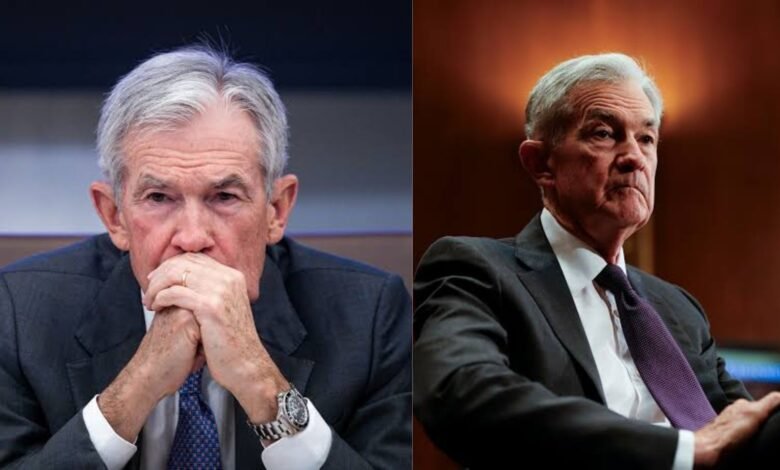
Jerome Powell has played a major role in shaping the U.S. economy, influencing borrowing costs, inflation policy, and financial market expectations. His decisions as Federal Reserve chair affected homeowners, businesses, investors, and millions of Americans watching interest rates. However, understanding his current position requires looking beyond his past leadership. Jerome Powell’s chair term ended in May 2026, and Kevin Warsh succeeded him as chair. Powell’s separate role as a member of the Federal Reserve Board of Governors has its own term.
His career continues to attract attention because of his influence on monetary policy, his relationship with Donald Trump, and questions surrounding a federal investigation into the Federal Reserve’s headquarters renovation. This guide explains Powell’s background, appointment, salary, estimated wealth, interest rate decisions, and public role in clear, accessible language.


Who Is Jerome Powell?
Jerome Hayden Powell is an American lawyer, former investment banker, and central banking official. He became widely known through his leadership of the Federal Reserve, the institution responsible for conducting U.S. monetary policy and supporting financial stability.
Born in February 1953 in Washington, D.C., Powell studied politics at Princeton University and earned a law degree from Georgetown University in 1979. Before entering government service, he worked in investment banking and at The Carlyle Group, a global investment firm.
His professional background combines finance, law, public policy, and government administration. These experiences helped prepare him for a position where decisions can influence mortgage payments, business borrowing, inflation, and international investment.
Is Jerome Powell Still the Federal Reserve Chair?
No. Jerome Powell is no longer the chair of the Federal Reserve as of October 2026. His second chair term ended in May 2026, and Kevin Warsh succeeded him.
Powell’s separate term as a member of the Board of Governors is scheduled to end on January 31, 2028. This distinction matters because leaving the chair position does not automatically mean leaving the Federal Reserve.
The chair leads the institution’s public communication and chairs the Federal Open Market Committee. A governor, however, continues to participate in the Board’s work and monetary policy decisions according to the applicable rules.
Who Appointed Jerome Powell?
President Barack Obama appointed Powell to the Federal Reserve Board of Governors in 2012. President Donald Trump later nominated him to become chair, and the U.S. Senate confirmed that nomination in January 2018.
President Joe Biden renominated Powell for a second chair term in 2021. The Senate confirmed him in May 2022, and he began his second term later that month.
This history explains the connection between Trump and Powell. Although Trump originally selected Powell for the chair position, their relationship became contentious over monetary policy and interest rate decisions.
Jerome Powell Biography: Complete Facts Table
| Detail | Information |
|---|---|
| Full name | Jerome Hayden Powell |
| Birth month and year | February 1953 |
| Birthplace | Washington, D.C., United States |
| Education | Princeton University and Georgetown University Law Center |
| Professional background | Lawyer, investment banker, government official |
| Federal Reserve governor since | 2012 |
| Began serving as chair | February 5, 2018 |
| End of chair term | May 2026 |
| Successor as chair | Kevin Warsh |
| Current Federal Reserve role | Governor, as of October 2026 |
| Board term scheduled to end | January 31, 2028 |
| Family | Married, with three children |
| Reported net worth | Estimates vary; public disclosures report asset-value ranges |
What Does the Federal Reserve Chair Actually Do?
The Federal Reserve chair leads the Board of Governors and chairs the Federal Open Market Committee, commonly known as the FOMC. This committee determines the target range for the federal funds rate, an important benchmark for short-term borrowing costs.
The chair also communicates the Federal Reserve’s assessment of economic conditions to Congress, financial markets, and the public. However, the chair does not independently control every monetary policy decision.
The main responsibilities include:
- Interest rates: Leading policy discussions about short-term borrowing costs.
- Inflation: Explaining how the Fed aims to achieve its 2% longer-run inflation goal.
- Employment: Considering labor market conditions alongside price stability.
- Financial stability: Supporting relevant supervisory and regulatory responsibilities.
- Public communication: Explaining decisions through speeches, press conferences, and congressional testimony.
The chair has considerable influence, but monetary policy decisions are made through the FOMC’s collective process.
Jerome Powell Interest Rates: Why Do His Decisions Matter?
Interest rates were among the most closely watched parts of Powell’s leadership. The Federal Reserve adjusts monetary policy to support maximum employment and stable prices, and its decisions influence borrowing costs throughout the economy.
When the Fed raises its policy rate, borrowing can become more expensive for households and businesses. Credit cards, new business loans, and some adjustable-rate borrowing may become costlier, while certain savings products may offer higher returns.
When the Fed cuts rates, borrowing conditions may become more favorable. However, mortgage rates and other long-term borrowing costs also depend on Treasury yields, inflation expectations, lender pricing, and broader market conditions.
How Interest Rates Affect Everyday People
- Homebuyers: Mortgage affordability can change as market rates move.
- Homeowners: People with variable-rate loans may experience payment changes.
- Small businesses: Financing equipment, inventory, and expansion can become more or less expensive.
- Investors: Changes in expected interest rates can influence stock and bond valuations.
- Savers: Deposit rates may adjust as banks respond to changing financial conditions.
The Federal Reserve does not directly set every interest rate in the United States. Its policy decisions influence financial conditions, but the effect on consumers varies.
What Happened to Jerome Powell? Understanding the Investigation
The phrase “Jerome Powell investigation” refers to a dispute involving the Federal Reserve’s headquarters renovation project and Powell’s congressional testimony about it.
In January 2026, Powell announced that the Department of Justice had served the Federal Reserve with grand jury subpoenas. The matter concerned testimony he had given to the Senate Banking Committee about the renovation of historic Federal Reserve office buildings.
Powell also argued that the investigation raised broader concerns about political pressure on monetary policy. That was his stated view, rather than a judicial finding about the government’s motives.
In April 2026, Powell said the U.S. attorney had closed the criminal investigation, while noting that it could potentially restart under specified circumstances.
Three distinctions help readers understand the issue:
- An investigation is not a conviction. The existence of an inquiry does not establish that someone committed a crime.
- The renovation dispute and monetary policy are separate questions. Claims about political motivation should be attributed to the people making them.
- The procedural status matters. Readers should distinguish a closed investigation from any later decision to reopen it.
The issue became significant because the Federal Reserve’s independence is central to public confidence in monetary policy.
Trump and Jerome Powell: Why Did They Clash?
The relationship between Donald Trump and Powell attracted attention because they held different views about the direction and timing of monetary policy.
Trump publicly pressed for lower interest rates, while Powell emphasized that Federal Reserve decisions should depend on economic data and the institution’s legal mandate.
Lower rates can encourage borrowing and investment, but cutting them too quickly can make inflation harder to control. Keeping rates high for too long, meanwhile, can put pressure on employment and economic activity.
The disagreement involved more than personalities. It raised a broader question: how can elected officials express their economic preferences while allowing the central bank to make independent decisions?
Powell’s position was that policy should follow the Federal Reserve’s assessment of inflation, employment, and financial conditions rather than political demands.
Jerome Powell Speech Today: How to Understand His Statements
People searching for a Jerome Powell speech today should distinguish between a newly published statement and older remarks that are circulating again.
Powell’s public comments during his chair tenure often addressed inflation, employment, economic growth, and the outlook for interest rates. His statements after leaving the chair position must also be understood in the context of his role as a governor.
When evaluating a speech, consider the following:
- The date and venue of the remarks.
- Whether Powell spoke as chair or as a governor.
- The economic data he discussed.
- Whether he announced a policy decision or explained his views.
- Whether the statement represents his remarks or a formal FOMC decision.
A speech does not automatically mean interest rates will change. Formal policy announcements and meeting records provide stronger evidence of actual decisions.
Jerome Powell Stock Market Warning: What Should Investors Know?
Searches for a Jerome Powell stock market warning often reflect concerns about inflation, interest rates, bond yields, or economic uncertainty. During his tenure, Powell regularly explained that monetary policy depended on incoming data and that financial conditions could change as the outlook evolved.
Investors should distinguish between a direct warning from Powell and an analyst’s interpretation of his comments. A falling stock market does not necessarily mean the Federal Reserve expects a recession, and a positive market reaction does not guarantee that rates will fall.
How Federal Reserve Decisions Influence Stocks
| Economic development | Possible market effect |
|---|---|
| Higher-than-expected inflation | Investors may expect rates to remain higher |
| Lower-than-expected inflation | Markets may anticipate easier monetary policy |
| Strong employment growth | May support earnings but affect rate expectations |
| Weak economic growth | May raise concerns about company profits |
| Higher Treasury yields | Can put pressure on stock valuations |
| Unexpected Fed announcements | May increase short-term market volatility |
These are possible relationships, not guaranteed outcomes. Investors should review economic releases and official policy statements before making financial decisions.
Jerome Powell Unsure About the Economy: What Does It Mean?
The phrase “Jerome Powell unsure economy” generally relates to uncertainty about inflation, employment, economic growth, or the future path of interest rates.
Central bankers regularly assess competing risks. Inflation may remain above the desired level even as hiring slows, creating a difficult choice between controlling prices and supporting employment.
A cautious economic outlook does not automatically indicate a recession. It means policymakers need to examine several indicators before deciding whether monetary policy should become tighter, remain unchanged, or become more supportive.
Important indicators include:
- The Consumer Price Index and Personal Consumption Expenditures inflation measures.
- Monthly employment and unemployment reports.
- Gross domestic product growth.
- Consumer spending and business investment.
- Treasury yields and credit conditions.
Interest rate decisions depend on the combined economic picture rather than one report or headline.
Jerome Powell Net Worth: How Wealthy Is He?
Jerome Powell’s net worth attracts attention because he worked in investment banking and private equity before joining the Federal Reserve.
His exact net worth is not publicly established as a single verified figure. Financial disclosure forms report assets and liabilities in categories and value ranges, which do not always allow a precise calculation of total wealth.
Some financial publications have estimated his net worth at around $50 million, but that is an estimate rather than an officially certified total. His earlier work at The Carlyle Group and other financial institutions is relevant to his financial background.
His wealth should not be confused with his government salary or treated as evidence of improper conduct.
Jerome Powell Salary: How Much Did He Earn?
The Federal Reserve chair receives government compensation rather than a salary determined by stock market performance or private investment returns.
Powell’s salary as chair was governed by federal compensation rules. The exact amount can vary by year, so readers should consult the applicable official salary schedule rather than assuming older figures remain current.
It is important to distinguish between three financial measures:
- Salary: Government compensation for official service.
- Net worth: Assets minus liabilities, subject to disclosure limitations.
- Investment income: Earnings from eligible investments and other reportable financial interests.
A person’s wealth may be much larger than their annual salary because of investments and assets accumulated over many years.
What Is Jerome Powell’s Term End Date?
There are two different dates to understand when researching Jerome Powell’s term end.
His second term as Federal Reserve chair ended in May 2026. His term as a member of the Board of Governors is scheduled to end on January 31, 2028.
His successor, Kevin Warsh, took office as chair in May 2026. Powell’s continued board membership means he remains part of the institution, but he is not its current chair.
Why Is Jerome Powell Trending Today?
Search interest in Powell may rise when financial markets react to Federal Reserve announcements, when reports discuss his investigation, or when news outlets revisit his relationship with Trump.
The search phrase “why is Jerome Powell trending today” does not, by itself, establish that a new event occurred on the publication date. Readers should verify the date of the latest announcement before treating an older story as breaking news.
To evaluate current coverage, check:
- The Federal Reserve’s official announcements and speeches.
- The latest FOMC statements and meeting minutes.
- Reputable reporting that identifies the date and source of a development.
- Whether the headline refers to Powell personally or to a broader Federal Reserve decision.
This approach helps distinguish current news from recycled reports and speculation.
What Is Jerome Powell’s Legacy at the Federal Reserve?
Powell’s tenure covered several major economic challenges, including the COVID-19 pandemic, the subsequent inflation surge, rapid interest rate increases, and debates over central bank independence.
His policy record can be assessed through inflation performance, employment outcomes, financial stability, communication, and the economic consequences of monetary decisions.
Supporters of his approach emphasized the importance of responding to economic data and bringing inflation under control. Critics questioned particular decisions, including the timing and pace of policy changes. A fair assessment considers both the circumstances policymakers faced and the outcomes that followed.
His departure from the chair position does not end those debates. Researchers, economists, lawmakers, and investors will continue to study the decisions made during his tenure.
Pro Tip: Verify Federal Reserve News Before Acting
Before making an investment or financial decision based on a headline about Powell, check the original statement, the date of publication, and the actual policy decision. Headlines can confuse market expectations with official announcements.
For example, a report that policymakers discussed a possible rate cut does not mean the FOMC approved one. Always distinguish discussion, forecasts, and confirmed decisions.
Key Takeaway
Powell served as Federal Reserve chair from 2018 until May 2026 and remains a Federal Reserve governor as of October 2026. His career, monetary policy decisions, financial background, and investigation continue to attract attention because they intersect with the U.S. economy and the independence of its central bank.
Readers seeking reliable updates should prioritize official Federal Reserve records and verified reporting. Understanding the difference between the chair’s role, a governor’s term, and the FOMC’s collective decisions provides a clearer picture of how U.S. monetary policy works.
Frequently Asked Questions
1. Who is Jerome Powell?
Jerome Powell is an American lawyer, former investment banker, and Federal Reserve official. He served as Federal Reserve chair from February 2018 until May 2026 and continues to serve as a member of the Board of Governors.
2. How old is Jerome Powell?
Powell was born in February 1953. He is 73 years old as of October 2026. His educational background includes Princeton University and Georgetown University Law Center.
3. Who appointed Jerome Powell as Federal Reserve chair?
President Donald Trump nominated Powell for the chair position in 2017, and the Senate confirmed him in January 2018. President Joe Biden later renominated him for a second term, which the Senate confirmed in May 2022.
4. What happened to Jerome Powell after his chair term ended?
Powell’s chair term ended in May 2026, and Kevin Warsh succeeded him. Powell remained a Federal Reserve governor, with his board term scheduled to end in January 2028.
5. What is Jerome Powell’s net worth?
His exact net worth is not publicly established as a single verified amount. Some financial publications estimate it at around $50 million, but financial disclosure ranges do not provide a definitive net worth figure.
6. Is Jerome Powell still under investigation?
Powell reported in April 2026 that the U.S. attorney had closed the criminal investigation concerning the Federal Reserve renovation project. He also described circumstances under which it could potentially restart. Readers should check the latest official announcements for any subsequent change in status.
Conclusion
Jerome Powell remains an important figure in American economic history because of his influence on interest rates, inflation, employment, and financial market stability. Although his term as Federal Reserve chair ended in May 2026, his continued role as a Federal Reserve governor keeps him connected to U.S. monetary policy. His career also highlights the importance of central bank independence, transparent decision-making, and careful economic analysis. Understanding Jerome Powell’s decisions and their effects can help readers make better sense of financial news and changing economic conditions. What do you think was the most significant decision of his Federal Reserve leadership? Share your thoughts and stay informed about the latest economic developments.







One Comment