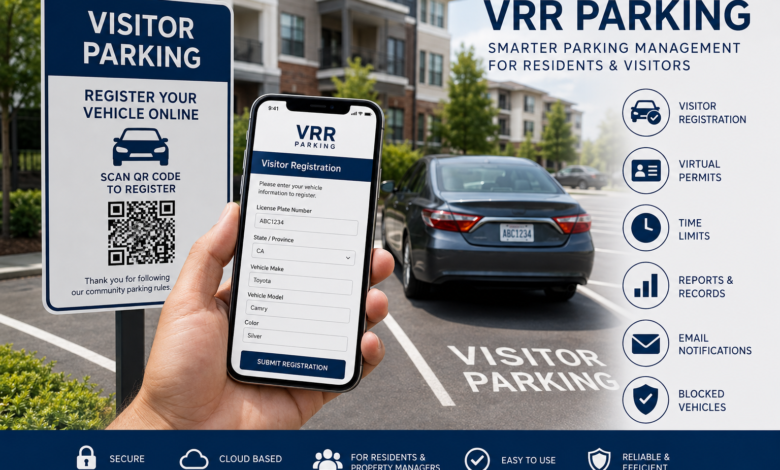
VRR parking is a digital parking management platform designed to help residential properties control visitor and resident vehicle access. Instead of relying entirely on paper permits or manual parking records, the system allows properties to register vehicles online, issue virtual permits, manage visitor sessions, and keep track of parking activity.
For residents and guests, the main attraction is convenience. For property managers, the platform is intended to make parking rules easier to administer while creating a record of registered vehicles. The company says its system is used by more than 500 properties and that more than one million visitors book parking tickets annually.


What Is VRR Parking?
VRR Parking is a parking management software service focused primarily on residential communities and properties with controlled visitor parking. Its system can be configured so residents register their guests, visitors register their own vehicles, or property staff manage registrations.
The platform supports both visitor registration and resident profiles using virtual permits. This means a property does not necessarily need to distribute physical permits every time a resident or guest needs authorization. Vehicle information can instead be recorded digitally and accessed through the management system.
This approach is particularly useful for apartment communities, residential developments, and other private properties where parking availability needs to be controlled.
How VRR Parking Works
The process depends on how an individual property has configured its parking rules, but the basic system is straightforward.
A visitor typically provides vehicle information through the online registration process. The property can then use that information to determine whether the vehicle is authorized to park. Residents can also maintain their profiles and register visitors when required.
Once a vehicle is registered, the platform can generate a visitor parking permit containing vehicle and parking information. VRR says its tickets are designed to provide detailed information so authorized vehicles can be distinguished from vehicles that have not followed the property’s registration requirements.
Property managers can also use the system to maintain records, review visitor histories, and receive automated updates.
Visitor Registration
Visitor registration is one of the platform’s central functions. A community can allow residents to register guests before they arrive, or visitors can potentially register themselves depending on the property’s setup.
This gives management a digital record of who is using visitor parking. It can also reduce the administrative work associated with issuing physical visitor permits.
Resident Virtual Permits
The resident-registration side of VRR parking is based on virtual profiles rather than relying exclusively on physical permits. According to the company, this can reduce the administrative burden of issuing and updating resident parking registrations.
Virtual registration can also make changes easier when a resident changes vehicles or when management needs to update a parking profile.
Key Features of the Platform
The value of VRR parking comes less from a single feature and more from combining several parking-management functions in one system.
| Feature | What It Does | Who Benefits |
|---|---|---|
| Visitor registration | Records guest vehicles before or during a visit | Residents and visitors |
| Virtual permits | Links parking authorization to digital profiles | Residents and managers |
| Time limits | Allows properties to control visitor parking duration | Property managers |
| Reports | Tracks visitor activity and related records | Management teams |
| Notifications | Sends updates to residents by email | Residents |
| Blocked vehicles | Prevents selected vehicles from registering or parking | Property managers |
| Cloud profiles | Stores resident information for online access | Management teams |
The platform also provides reporting tools that can show visitor histories and other parking information. Automated email notifications are another feature intended to keep residents informed about parking activity.
Can VRR Parking Charge Visitors?
Potentially, yes, depending on the parking scheme established by the property.
The company states that properties can set visitor time limits and add fees for parking beyond the permitted period. It also describes a revenue-sharing model in which it takes 30% of a property’s parking earnings, with the remaining amount transferred to the property.
That means pricing and parking charges should not be assumed to be identical everywhere. Residents and visitors should check the rules displayed by their specific property before registering a vehicle or leaving it parked.
💡 Pro Tip: Before registering a guest vehicle, check the property’s parking sign or registration instructions first. Confirm the allowed parking period, required vehicle details, and whether payment is required. Parking rules are property-specific, so the general features of the platform should not be treated as a universal parking policy.
Is VRR Parking the Same as a Public Parking App?
No. VRR parking is primarily presented as a private-property parking management solution rather than a general-purpose public parking app.
That distinction matters because authorization normally comes from the property operating the parking scheme. A successful registration does not automatically mean that a vehicle can park anywhere using the system.
This is similar to resident and visitor parking programs operated by local authorities, where eligibility, zones, hours, and permit requirements can vary. For example, UK councils commonly require visitors to use a visitor permit when parking in controlled residential areas.
What Should Visitors Check Before Parking?
A visitor should pay attention to the instructions provided at the property rather than assuming registration alone is enough.
Check:
- Whether visitor registration is required.
- Which vehicle details must be entered.
- How long the registration remains valid.
- Whether the parking area has specific restrictions.
- Whether additional parking time creates a charge.
- Whether the vehicle must remain in a particular visitor area.
Some properties may also have separate rules for overnight parking, commercial vehicles, disabled parking, or reserved spaces.
The same principle applies to digital permits. A virtual permit generally authorizes parking under the rules of a particular zone or property; it does not necessarily reserve a specific parking space. Local parking authorities make similar distinctions between having a permit and having a guaranteed bay.
Benefits for Property Managers
For management teams, VRR parking can replace several manual processes with a centralized digital system.
Instead of maintaining stacks of paper permits, staff can access resident profiles, visitor records, and reports online. The company also says property managers can block selected vehicles, monitor parking activity, and access resident information through cloud-based profiles.
Digital records may also make it easier to investigate parking disputes because management has access to registration information and visitor history.
The system can therefore be useful where a property has limited visitor spaces and needs a consistent way to determine which vehicles are authorized.
Common Problems to Avoid
The biggest mistake visitors can make is assuming that seeing a registration sign automatically means the parking arrangement is legitimate or applies to their situation.
If a QR code or registration instruction appears unexpectedly, verify it with the property manager, landlord, building office, or another trusted source before entering personal or vehicle information.
This is especially relevant because the BBB Scam Tracker has published a 2025 report involving a person who alleged that VRR Parking signs were placed at an apartment complex without the property’s authorization. The report is an allegation submitted to the BBB, not a finding that the company engaged in wrongdoing, so it should be treated as a reason to verify unexpected parking instructions rather than as proof of misconduct.
Frequently Asked Questions
What does VRR Parking do?
VRR Parking provides digital parking management software for properties that need to control resident and visitor parking. Its services include visitor registration, virtual resident permits, parking records, reporting, notifications, time limits, and vehicle restrictions. The exact rules applied to a vehicle depend on the property using the system.
Do I need to register my car with VRR Parking?
If the property requires VRR registration for visitor or resident parking, you may need to register before leaving your vehicle there. Requirements vary by property. Check the parking signs or contact the property manager to confirm whether registration is mandatory and what information you need to provide.
Can VRR Parking tow my vehicle?
The platform itself is parking-management software, while enforcement arrangements can depend on the property and its parking policy. Do not assume that registration guarantees protection from enforcement. Read the posted parking terms and contact property management if you are uncertain about authorization or towing procedures.
Is VRR Parking available for residential properties?
Yes. Residential parking management is a central use case for the service. The company describes resident profiles, visitor registration, virtual permits, parking restrictions, reports, and cloud-based resident information as part of its offering.
Are VRR Parking fees the same at every property?
No. Parking charges can depend on the individual property’s parking scheme. VRR states that its system can support time limits and fees for additional parking time, while its revenue model is based partly on the earnings generated through participating properties.
📌 Key Takeaway: VRR parking is best understood as a digital management system for private residential and visitor parking. It can simplify registration, virtual permits, records, notifications, and enforcement-related administration, but the actual parking rules come from the property using the service. Always verify the instructions at your specific location before registering or leaving a vehicle.
Why VRR Parking Matters for Modern Residential Communities
Parking problems can quickly become a source of conflict when visitor spaces are limited and management relies on informal registration. A digital system gives properties a structured way to record vehicles and communicate parking requirements.
For residents, the biggest advantage is convenience: visitor details can be handled digitally instead of depending entirely on physical permits. For managers, the system provides centralized records and tools for controlling parking activity.
That does not eliminate the need to read local or property-specific rules. A digital permit is only useful when it matches the authorization requirements of the location.
For anyone researching VRR parking, the most important point is simple: understand who operates the parking scheme, confirm the registration requirements, and check the permitted parking period before leaving a vehicle on the property.
Conclusion
VRR parking provides a digital approach to visitor and resident parking management, combining vehicle registration, virtual permits, reporting, notifications, and parking controls in one platform. Its usefulness depends on how individual properties configure and enforce their parking policies.
If you encounter a VRR registration requirement, verify the instructions with the property and carefully review the applicable parking terms. That small step can help prevent misunderstandings about authorization, parking duration, or potential charges.